


Iverson Road house removals advice for narrow access
Posted on 06/06/2026
![A close-up view of a brick exterior wall showing a street sign that reads 'Lower Terrace NW3' mounted on the wall. The bricks are dark red with visible mortar, and the sign is made of metal with white lettering on a background of alternating green and black panels. In the background, there is a blurred outdoor scene with trees and greenery, suggesting a residential area in West Hampstead. This image is relevant to house removals and moving logistics, illustrating a typical location for home relocation activities involving furniture transport, packing, and loading processes facilitated by [COMPANY_NAME]. The lighting appears natural, with daylight illuminating the scene, and the photo captures the moment before or during a move, emphasizing the narrow access challenges often faced in urban house removals.](/pub/blogphoto/iverson-road-house-removals-advice-for-narrow-access1.jpg)
If you are planning a move on Iverson Road and the access looks tight, awkward, or downright unforgiving, you are not alone. Narrow front paths, shared entrances, parked cars, basement stairs, and small vans all change the shape of a house move very quickly. This guide gives you practical, on-the-ground Iverson Road house removals advice for narrow access so you can avoid damage, reduce stress, and keep the day moving properly. It is written for real homes, real furniture, and the kind of moving day surprises that tend to show up just when you think you have everything under control.
Whether you are moving a full family house or a smaller property with awkward entry points, the winning formula is usually the same: plan the route, reduce the size of the load, protect walls and doorframes, and choose the right vehicle and crew. Sounds simple. In practice, it is often a little fiddly. The good news is that narrow access moves can be handled smoothly with the right preparation.
Why Iverson Road house removals advice for narrow access Matters
Narrow access is more than a minor inconvenience. On a street like Iverson Road, the physical layout around the property can decide how your removal day runs from the first lift to the last box. If the van cannot park close enough, if the hallway turns sharply, or if the front garden gate is too tight for a sofa, you lose time and increase risk. That means more lifting, more carrying, and a greater chance of scuffed paint, bumped furniture, or strained backs.
In house removals, distance matters. Every extra metre from van to front door adds effort, delays loading, and often changes the size of vehicle you can realistically use. Let's face it, a move can feel smooth right up to the moment the wardrobe hits the staircase and everyone suddenly goes quiet. That is exactly why narrow-access planning deserves proper attention.
On Iverson Road, the challenge is usually not one single issue but a combination of small ones: limited kerb space, close neighbours, shared access, narrow porches, internal stairs, and the need to work respectfully in a residential setting. Good planning reduces friction. It also helps you choose between a full house removals service in West Hampstead, a more flexible man and van approach, or a larger team with a suitable removal van.
Expert summary: narrow-access moves are won before moving day, not during it. Measure early, clear the route, book the right vehicle, and keep the load modular. That is the boring answer, but honestly, it works.
How Iverson Road house removals advice for narrow access Works
A narrow-access removal is built around access management. The team studies how items will get from the property to the vehicle, and then works backwards from that. Instead of assuming a standard house move will fit the street, the move is adapted to the street.
In practical terms, that usually means checking four things:
- Vehicle access: can a van stop safely nearby without blocking neighbours, junctions, or driveways?
- Pedestrian route: is there a clean path from the front door to the van, without tight turns or obstacles?
- Item dimensions: will large items pass through doors, halls, corners, and stair landings?
- Handling method: should items be dismantled, wrapped, carried by two people, or moved with specialist equipment?
For example, a two-seater sofa may be straightforward if it can stand upright through a side entrance. The same sofa may become a headache if it has to be rotated through a narrow hall with a low ceiling. A wardrobe that looks manageable in the bedroom can be awkward once you meet a sharp stair turn. This is why proper surveying matters so much.
If you are already comparing options, it helps to look at broader support too. Some people need a simple loading plan, while others benefit from a fuller service package such as removal services in West Hampstead or even removal companies with more flexible scheduling and crew sizes. The right fit depends on what the access is actually like, not just on the number of rooms.
Key Benefits and Practical Advantages
The main benefit of narrow-access planning is simple: fewer surprises. But there are a few other gains worth spelling out, because they matter on the day.
- Less damage risk: you can protect walls, banisters, doorframes, and floors before anything heavy moves.
- Better vehicle choice: a smaller vehicle may be easier to park, unload, and manoeuvre in a tight residential street.
- Faster loading flow: pre-wrapped, labelled items are easier to move in a controlled sequence.
- Lower fatigue: fewer wasted trips and fewer awkward carries mean less physical strain.
- Cleaner communication: everyone knows where to park, where to stand, and what order to move items in.
There is also a quieter benefit that people sometimes overlook: confidence. When a move feels planned, it feels manageable. You will notice that the whole tone changes. People stop improvising and start executing. That sounds dramatic, but moving day really does run better when there is a shared plan.
For households with mixed item types, narrow-access planning can also help you separate the move into sensible parts. Heavy furniture may be handled one way, packed boxes another, and delicate items like mirrors or instruments with extra care. If you have a piano, for instance, the logistics are different again, and a specialist option such as piano removals in West Hampstead may be the sensible route.
Who This Is For and When It Makes Sense
This advice is relevant if your property has any of the following:
- a narrow front path or gated entrance
- a small staircase or tight landing
- limited kerbside parking directly outside the property
- shared access with neighbours
- basement or upper-floor rooms with awkward turning space
- large furniture that cannot simply be carried out in a straight line
It is especially useful for family homes, older terraced properties, and houses where the internal layout is a bit less forgiving than modern builds. The same goes for anyone moving during a busy school run, on a weekday morning, or in a street where bins, bikes, and parked cars tend to narrow the route further.
Sometimes the issue is not the house itself but the timing. A perfectly workable access route at 10 a.m. can become awkward by late afternoon if the street fills up. So yes, timing matters. A lot. If you can choose your loading window carefully, do it.
It also makes sense for people who are juggling multiple priorities, such as renters ending a tenancy, homeowners completing on a purchase, or landlords turning over a property. If you are new to the area or weighing up moving costs alongside the value of the property itself, related reading like home purchase tips for Hampstead and wise property investment considerations can help with the wider decision-making picture.
Step-by-Step Guidance
Here is the practical sequence that usually works best for a narrow-access house move on or around Iverson Road.
- Measure the access points. Check door widths, hallway width, stair turns, ceiling height on landings, and the width of any gates or side passages.
- Identify the largest awkward items. Sofas, mattresses, wardrobes, bed frames, dining tables, and white goods should be reviewed first.
- Decide what must be dismantled. A bed frame taken apart early is often far easier than trying to force it through a tight stairwell. Same with large shelving.
- Clear the route completely. Remove mats, shoes, plant pots, loose cables, and anything that could snag a trolley or catch a boot.
- Reserve parking or plan a drop-off point. If the van cannot stop right outside, agree the fallback position and walking route in advance.
- Use the right packing format. Uniform, stackable boxes help more than oversized bags that wobble through a narrow hallway.
- Load in the right order. Heavier items first, fragile items protected and separate, and smaller boxes filling the gaps.
- Protect the property. Use floor coverings, blanket wraps, and edge protection where necessary.
- Keep a short communication loop. One person should direct the move. Too many instructions at once gets messy fast.
A small but useful tip: photograph the route before moving day. A quick picture of the front path, the stairs, and the parking situation can save a lot of back-and-forth. It is simple, a bit old-fashioned maybe, but effective.
If you are still building the packing side of the move, the page on packing and boxes in West Hampstead is a helpful companion, especially when you want to keep the load compact and easy to handle.
Expert Tips for Better Results
There are always the obvious tips, and then there are the ones that save the day in a cramped front hallway when everyone is already tired.
1. Break large jobs into smaller carries
One oversized load can be more difficult than three smaller ones. For narrow access, that matters. A box that is manageable on its own is much easier to rotate, lift, and guide than one that is packed to the brim.
2. Treat corners as the real enemy
People often focus on the door width, but corners and stair turns are where items get stuck. A sofa that clears the door may still jam at the bend. Check the turning space, not just the opening.
3. Use soft protection early
Moving blankets, door-jamb protection, and floor runners are easiest to place before the load starts. Once the work is underway, nobody wants to stop and fit them properly. The rush is real.
4. Keep the street side calm
If you are unloading close to neighbours, keep walkways clear and avoid leaving items in shared access points. A tidy setup reduces complaints and helps the day feel controlled. This is especially helpful if you are using a man with a van service for a lighter move or a quick turnaround.
5. Book a realistic team size
Underbooking is a classic mistake. Two people may be enough for boxes and light furniture, but not for bulky items plus a tricky staircase. A small crew can still do a brilliant job, but only if the load matches the team.
And yes, a slightly over-prepared plan can feel excessive the night before. But on moving day, excessive preparation usually looks like common sense.
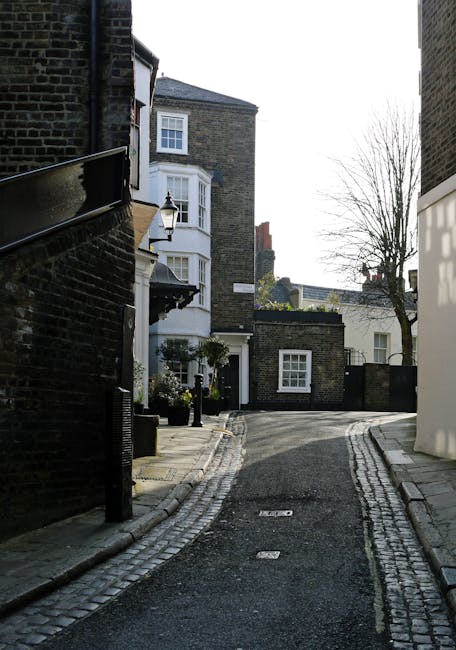
Common Mistakes to Avoid
Most narrow-access moving problems come from a handful of avoidable errors. Nothing exotic. Just the usual little things that snowball.
- Not measuring properly: guessing the width of a gate or staircase is asking for trouble.
- Leaving packing too late: half-filled boxes and loose items slow everything down.
- Assuming a large van is always better: sometimes a smaller vehicle is safer and quicker.
- Forgetting to dismantle furniture: if it is clearly too large, take it apart before the team arrives.
- Blocking the route with clutter: shoes, coats, plant pots, toys, and recycling bags all get in the way.
- Ignoring neighbour access: shared entrances need courtesy and planning.
- Overpacking boxes: too-heavy boxes are miserable in tight spaces and more likely to split.
A common one, and a bit of a maddening one, is failing to think about the end of the move. You get the furniture out, but the new property has its own narrow hallway and the same problem repeats. The answer is to plan both ends of the journey, not just the pickup address.
If storage is part of your strategy, perhaps because the access is too tight for everything to move in one go, consider a staged move supported by storage in West Hampstead. That can make awkward removals feel much more manageable.
Tools, Resources and Recommendations
You do not need a van full of specialist kit to handle a narrow-access move, but a few basics make a genuine difference.
| Tool or resource | What it helps with | Why it matters in narrow access |
|---|---|---|
| Measuring tape | Checking doors, stair turns, and furniture dimensions | Prevents nasty surprises when items reach the tightest point |
| Furniture blankets | Wrapping bulky or delicate items | Helps protect both the item and the property walls |
| Sturdy boxes | Stackable packing and easier carrying | Boxes travel better than loose bags through narrow hallways |
| Floor runners | Protecting floors from dirt and scuffs | Useful where repeated trips are needed |
| Furniture tools | Taking beds, tables, and shelving apart | Often the difference between a smooth carry and a stuck item |
For most people, the most useful recommendation is not a gadget at all. It is choosing a moving approach that suits the access. Some jobs are best handled through a straightforward man with van option; others need a fuller house removal package with extra lifting support. If the move is small and time-sensitive, same-day removals in West Hampstead can be useful, provided the access challenge is clearly understood first.
It is also worth checking the company's broader information pages before you book, especially around services, pricing and quotes, and insurance and safety. That kind of context helps you compare apples with apples, which is rare enough in removals to be worth saying out loud.
Law, Compliance, Standards, or Best Practice
For a residential removal, the most relevant compliance points are usually practical rather than legalistic. Still, they matter. A good mover should work in line with common UK safety expectations, use sensible manual-handling methods, and avoid creating avoidable hazards in shared areas or on the public highway.
Best practice usually includes the following:
- safe lifting techniques and team coordination
- careful assessment of access before heavy items are moved
- respect for neighbours, shared entrances, and communal spaces
- appropriate care for floors, walls, and stair surfaces
- clear communication about limitations, risks, and timing
If vehicles may need to pause close to the property, it is sensible to avoid blocking access, driveways, and pedestrian routes. If a move requires loading in a tight street, the team should plan for visibility, trip hazards, and efficient positioning. None of that is glamorous, but it is the stuff that keeps the day safe and civilised.
For reassurance, you can also review a provider's own policies, such as health and safety guidance, terms and conditions, and payment and security information. They are not the exciting parts of moving, granted, but they help set expectations.
Options, Methods, or Comparison Table
If you are deciding how to tackle a narrow-access move, the choice often comes down to three main methods. Here is a simple comparison.
| Method | Best for | Strengths | Limitations |
|---|---|---|---|
| Man and van | Smaller moves, flexible loads, limited parking | Agile, often easier to position in tight streets | May not suit larger households or heavy furniture piles |
| Full house removals | Whole-property moves and more furniture | More structured, usually better for awkward or bulky loads | Needs clearer planning and enough parking space |
| Staged move with storage | Complex access, renovation gaps, or timing issues | Reduces pressure on one moving day | Extra handling and potentially more coordination |
To be fair, the best option is rarely the biggest one. It is the one that fits the street, the property, and the amount of furniture you actually need to move. That is why a quick discussion before booking can save quite a bit of trouble later.
Case Study or Real-World Example
Imagine a family moving from an older house on Iverson Road with a narrow front path, a fairly tight hallway, and a sofa that has one awkward fixed arm. On paper, it sounds like a standard household removal. In reality, it needs a little choreography.
The moving plan could look like this:
- the sofa is measured and checked against the hallway width beforehand
- the bed frame is dismantled the day before
- boxes are packed into uniform sizes so they stack cleanly
- a smaller van is chosen to improve parking flexibility
- one person directs loading while others keep the route clear
On the day, the team arrives, protects the door edges, and carries the furniture in a controlled sequence. The first ten minutes are a little slow, then the pace settles. You can hear the tape tearing, the soft thud of blankets being folded, and the scrape of a box being eased rather than dragged. By the time the last item leaves, the route is still clean and no one is muttering about the staircase. That is a good move, plain and simple.
In this kind of scenario, the biggest win is not speed. It is control. The move feels deliberate rather than frantic, and that tends to reduce damage and stress for everyone involved.
![A close-up view of a brick exterior wall showing a street sign that reads 'Lower Terrace NW3' mounted on the wall. The bricks are dark red with visible mortar, and the sign is made of metal with white lettering on a background of alternating green and black panels. In the background, there is a blurred outdoor scene with trees and greenery, suggesting a residential area in West Hampstead. This image is relevant to house removals and moving logistics, illustrating a typical location for home relocation activities involving furniture transport, packing, and loading processes facilitated by [COMPANY_NAME]. The lighting appears natural, with daylight illuminating the scene, and the photo captures the moment before or during a move, emphasizing the narrow access challenges often faced in urban house removals.](/pub/blogphoto/iverson-road-house-removals-advice-for-narrow-access3.jpg)
Practical Checklist
Use this checklist before moving day. It is short, but it covers the things that tend to matter most on narrow-access jobs.
- Measure all doors, halls, stair turns, and any side or rear access points
- List the largest items and identify anything that needs dismantling
- Confirm parking options and likely van positioning
- Pack boxes in manageable weights, not oversized mixed loads
- Wrap delicate items and protect corners of furniture
- Clear the route inside and outside the property
- Tell neighbours if shared access may be affected
- Keep tools, keys, documents, and chargers separate and easy to find
- Check the weather if items may be moved over open ground
- Confirm the mover understands the narrow access before arrival
Quick takeaway: if the access feels tight in your head, it will probably feel tighter with a wardrobe in your hands. Plan accordingly. A little blunt, but true.
Conclusion
Iverson Road house removals advice for narrow access comes down to one simple idea: make the property work for the move, not the other way around. Measure honestly, pack sensibly, choose the right size of vehicle, and handle the route like it matters. Because it does.
If you prepare well, a narrow-access move does not have to feel chaotic or risky. It can be careful, efficient, and surprisingly calm. That calm is often what people remember most afterwards, once the boxes are in and the kettle is on. And really, that is the goal.
If you want to compare options or talk through a difficult access point before moving day, take a look at the wider support pages and book the approach that suits your property best.
Get a free quote today and see how much you can save.
