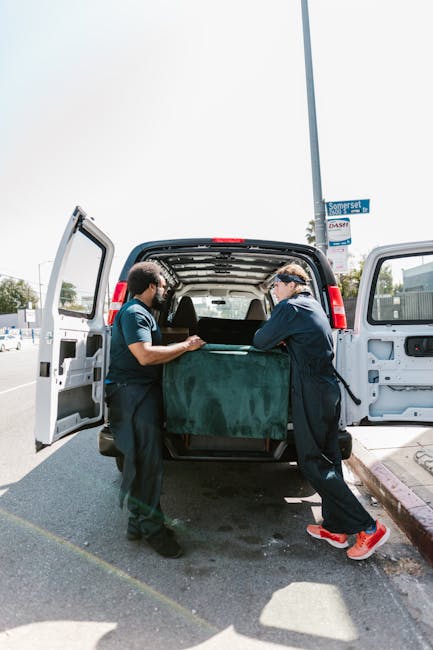

Mill Lane student move cheap removals and man and van tips
Posted on 15/06/2026

If you are planning a student move around Mill Lane, you probably want the same three things everyone else wants: it needs to be cheap, it needs to be quick, and it needs to be less stressful than last term's deadline week. That is exactly where practical Mill Lane student move cheap removals and man and van tips come in. The right approach can save money, reduce hassle, and stop a small flat move from turning into a long, awkward day of missing keys, overfilled bags, and one too many trips up the stairs.
In this guide, we will look at how to keep a student move lean without cutting corners, how a man and van service usually works, what to watch out for in local London moves, and how to make decisions that actually suit your room, your budget, and your timetable. A few sensible choices upfront make a big difference. Truth be told, that is half the battle.
You will also find a checklist, a comparison table, and a realistic step-by-step plan you can use whether you are moving from halls, a shared flat, or a small studio near Mill Lane and the wider West Hampstead area.
Why Mill Lane student move cheap removals and man and van tips Matters
Student moves are rarely huge, but they are often oddly complicated. You may only have a bed, a desk, a couple of suitcases, a monitor, and a pile of kitchen bits that somehow expand to fill three boxes. Even so, the logistics can be messy. Narrow pavements, shared entrances, parking pressure, and a small lift that barely takes one box at a time can all slow things down.
Mill Lane sits in a part of London where convenience matters. If your move is under-planned, costs can creep up fast. Extra time on the job, multiple trips, last-minute boxes, and parking delays all tend to hit the budget harder than expected. That is why cheap removals are not just about finding the lowest price. They are about choosing the right service for the amount you actually need moved.
For many students, a man and van is the sweet spot. It is flexible, usually more affordable than a full-scale removal team, and well suited to smaller loads. But there is a catch: cheap does not mean careless. If you do not think through access, packing, timing, and the amount of furniture you have, the "cheap" option can become expensive pretty quickly. Annoying, but common.
That is also why it helps to understand the difference between a basic van booking and a properly organised student move. A good move is not just transport. It is planning, loading order, parking awareness, and a realistic time estimate. The details matter more than people think.
For more background on the service side, you may find the page on student removals in West Hampstead useful, especially if you are comparing ways to move light loads without overpaying.
How Mill Lane student move cheap removals and man and van tips Works
A man and van move is usually straightforward. You book a vehicle, explain what you need moved, agree a time window, and arrange collection and delivery. The driver or mover helps with loading, transport, and often unloading as well. For student moves, the service is typically sized around smaller property loads rather than full households. That is the key difference.
In practical terms, the service works best when you have already sorted your items into a clear plan: what is going, what is being donated, what is going to storage, and what needs to be handled carefully. One box labelled "kitchen" is fine. Ten unlabelled boxes marked "misc" is not. Let's face it, nobody wants to be hunting for a kettle while standing in a half-empty flat.
Most budget-friendly student moves work best when the route is simple and the load is compact. If you have access issues, a lot of furniture, or awkward timing, it may still work, but you need to plan accordingly. In some cases, a larger vehicle or a more full-service removals option can actually be better value because it reduces the number of runs and the time spent on site.
If your move is part of a wider flat relocation, or you are moving more furniture than a typical student load, a page like flat removals in West Hampstead can help you think about the difference between a light student move and a more involved relocation.
The best results usually come from simple communication. Say how many boxes you have, whether there is a desk or bed frame, whether there is a lift, and whether parking is nearby or a bit of a nightmare. That information helps shape the quote and avoids awkward surprises on the day.
Key Benefits and Practical Advantages
There are several reasons students choose a man and van service instead of hiring a larger removal company. The biggest benefit is value for money, but there is more to it than that.
- Lower cost for smaller loads: You are not paying for a service level you do not need.
- Flexible booking: Useful if your tenancy dates, keys, or handover times are a bit awkward.
- Quicker turnaround: Smaller jobs can often be loaded and unloaded efficiently when packed well.
- Better for short local moves: Ideal for moves across NW6, nearby boroughs, or into central London halls.
- Less wasted space: A van that matches the load is usually smarter than hiring something oversized.
There is also a hidden advantage: simplicity. A smaller, focused move encourages you to declutter, label properly, and decide what you actually need. That alone can make the whole process feel lighter. And yes, physically lighter too.
Budget planning gets easier as well. If you are comparing options, a transparent quote from a provider with clear pricing helps you avoid the old moving-day trick of "oh, we did not realise it was that much stuff." If you want to understand how quotes are usually structured, the pricing and quotes page is a sensible starting point.
There is another benefit people sometimes overlook: fewer handling stages. With a simple student move, the same team can often handle the load from door to van to destination without the complexity of a multi-crew operation. For a few boxes and a mattress, that can be exactly what you want.
Who This Is For and When It Makes Sense
This approach is ideal if you are:
- moving between student accommodation and a shared flat
- relocating from Mill Lane to another nearby part of London
- transporting a few pieces of furniture plus boxes
- moving out at short notice, but not with a full house's worth of items
- trying to keep costs down without doing the whole move alone
It also makes sense if you are in a situation where borrowing a friend's car is impossible, or frankly a bit reckless. A car boot full of books and bedding sounds thrifty until you try to wedge a desk lamp between two bags and the gearstick. Not ideal.
If you are leaving a rental flat with normal student furniture and a manageable number of boxes, a man and van can be the right compromise. If, however, you have a sofa, a dining table, multiple bookcases, and a tight staircase, then you may need to compare that option with a broader removal services overview or even a more general removal companies comparison.
It is also worth saying that a student move is not automatically "easy" just because it is small. Access is often the real challenge. Top floor flat, no lift, awkward parking, and a rainy afternoon? That changes the picture very quickly.
Step-by-Step Guidance
Here is a practical way to plan a cheap student move without falling into the usual traps.
- Count what you actually have. Make a list of boxes, bags, furniture, and fragile items. Be honest. The extra two boxes always matter more than you think.
- Measure the big pieces. Check beds, desks, mirrors, and any awkward items against staircases and doorways. A tape measure takes seconds and can save a lot of grief.
- Choose what you are not taking. Donate, recycle, or sell anything you do not need. Fewer items usually means a cheaper move.
- Book the right size vehicle. A small van is often enough for student loads, but a little extra space can be useful if you have bulky bedding or furniture.
- Confirm the access details. Note the floor, lift access, parking restrictions, and any narrow streets or entrances.
- Pack in loading order. Put heavy boxes at the bottom and fragile items where they will not get crushed.
- Label everything clearly. Room labels save time. They also reduce the chance of one box disappearing into a corner for three days.
- Keep essentials separate. Passport, charger, medication, keys, wallet, and one change of clothes should stay with you.
- Check the quote carefully. Make sure the service includes loading help, mileage, waiting time, and any likely extras.
- Be ready before the van arrives. Students often underestimate the difference between "packed" and "ready to go."
If you want a fuller packing reference, the packing and boxes guidance can help you sort the basics before move day. For more information on packing supplies and sensible preparation, see package and boxes advice as well.
Small thing, but a useful one: pack a "first night" bag. Toothbrush, phone charger, snacks, toilet paper, bedding, and a kettle if you are the sort who needs tea before anything else. That one bag can save you from rummaging through ten boxes at 11pm.
Expert Tips for Better Results
Cheap removals work best when the move is controlled. The following tips are the kind that save time in the real world, not just on paper.
- Move early in the day: Traffic, lift queues, and parking pressure can get worse later on.
- Avoid peak changeover times if possible: End-of-term moving days are busy. Sometimes very busy.
- Stack boxes by weight, not by guesswork: Books and kitchenware belong in smaller boxes. Otherwise they become back breakers.
- Disassemble simple furniture in advance: Beds, shelves, and tables often move more efficiently when broken down first.
- Protect corners and glass: Blankets, towels, and bubble wrap all help. You do not need fancy materials for every item.
- Check for parking constraints: In London, a few extra minutes finding a spot can undo an otherwise efficient move.
- Keep the route short and clear: Clear hallways and doorways before the van arrives.
One of the best things you can do is communicate like a planner, not a hopeful optimist. "It should fit" is rarely as useful as "there are 12 boxes, a dismantled bed, and one desk." Being specific helps the mover give you a fairer estimate.
And if you are unsure whether a man and van is enough, compare it against a broader man and van service or a more vehicle-focused removal van option. The right choice depends on load size, not on guesswork.
To be fair, the best move is usually the one that looks boring from the outside. A few boxes in order, one van, no drama, everyone home by tea time. That is the dream.

Common Mistakes to Avoid
A student move often goes wrong for surprisingly ordinary reasons. The biggest mistake is underestimating volume. A few bags and a chair can become a van full of awkward clutter if you do not sort things properly.
Another common issue is poor packing. People use massive boxes for books, then wonder why the box tears on the stairs. Use smaller boxes for dense items, and save bigger boxes for light things like bedding and clothes.
Late booking is another classic. The cheaper services often fill up first, especially around term changes. If you leave it too late, you may have fewer time slots and less flexibility. That can push you towards a same-day move or a rushed booking, which is rarely the cheapest route. If speed matters, a same-day removals option may be the safer backup, but it is usually better to plan ahead where possible.
People also forget the small stuff: keys, permits, lift bookings, and delivery rules at the new place. When those details are missing, the mover can still arrive on time, but the whole day becomes slower than it should be.
There is also a subtle mistake that catches out a lot of students: trying to save money by skipping proper protection for fragile or sentimental items. It can be tempting to wrap things in a hoodie and hope for the best. Hope is not padding.
Tools, Resources and Recommendations
You do not need special equipment to move well, but a few simple tools make a real difference.
- Marker pens: For box labels and room names.
- Strong tape: Cheap tape fails at the worst moment.
- Trolley or sack truck: Useful if you have stairs or a larger load.
- Furniture covers or blankets: Good for desks, tables, and soft furnishings.
- Reusable bags: Handy for loose items, chargers, and bathroom bits.
- Measuring tape: One of the most underrated moving tools, oddly enough.
There are also a few website resources worth reading before you book. A good place to start is the wider services overview, especially if you want to compare student moves against furniture or house removals. If your move involves a bed, wardrobe, or table, the furniture removals page can help you judge whether your load is still in the student-move range or something larger.
If you are still comparing providers, the about us page can help build trust, while contact is the straightforward next step when you are ready to ask about dates, vehicle size, or a quote.
A small but important recommendation: do not choose solely on headline price. A slightly more expensive quote with clearer inclusions can be better value than a bargain quote loaded with uncertainty. Moving day is not the time for surprises.
Law, Compliance, Standards, or Best Practice
For a simple student move, you usually do not need to get deeply tangled in regulation, but good practice still matters. In the UK, removals work is expected to follow sensible standards around vehicle safety, loading, and insurance. It is reasonable to ask whether the mover has appropriate cover and whether items will be handled carefully.
Parking and access also matter in a very practical way. If a van needs to stop on a busy street, the driver should plan sensibly and avoid causing obstruction. You should also make sure any building rules, lift booking requirements, or loading instructions are followed. In many London properties, those small rules are what prevent delays.
From a consumer point of view, clarity is the main best practice. You should know what is included, what could cost extra, how cancellations are handled, and what happens if access turns out to be more difficult than described. That is where a clear terms and conditions page is useful. Likewise, if you want reassurance on handling and protection, review the insurance and safety information.
If you care about how waste is dealt with during the move, it is sensible to choose a provider that takes disposal and reuse seriously. A page on recycling and sustainability can show how that side of the job is approached. And if payment matters, which it usually does, look at payment and security details before you book.
That is the practical standard: clear communication, proper handling, and no fuzzy promises.
Options, Methods, or Comparison Table
Choosing the right move style is often easier once you compare the options side by side.
| Option | Best for | Pros | Limitations |
|---|---|---|---|
| DIY move with car or borrowed vehicle | Very small loads, a few bags | Cheap upfront, flexible timing | Slow, tiring, risky for bulky items |
| Man and van | Typical student moves, boxes, light furniture | Good value, fast, practical | Less suitable for large households or heavy loads |
| Full removal service | Big moves, multiple rooms, complex access | More support, better for large or awkward jobs | Usually costs more than a small van booking |
For many Mill Lane students, the man and van option hits the best middle ground. It is cheaper than a full team, but much easier than trying to do everything yourself. If your move is mixed - say, boxes and a bed frame, plus a few pieces of furniture - it is worth comparing with a more general house removals service too. Sometimes the right answer is not the smallest option. Sometimes it is the simplest one.
If your route is within West Hampstead or nearby streets with tight access, these local case-study style pages can be useful background: West End Lane flats moving advice and narrow access guidance for house removals. They are especially handy if stairs, corners, or access are likely to shape your move.
Case Study or Real-World Example
Imagine a student leaving a small flat near Mill Lane at the end of term. The load is modest: a single bed frame, a desk, two suitcases, six boxes, a mirror, bedding, a microwave, and a few kitchen items. The new place is a shared flat a short distance away, but there is limited parking outside both properties.
If this move is handled casually, it can still become a long day. Boxes get packed late, nobody labels them properly, and the mover has to wait while someone searches for the key to the storage cupboard. That is how costs creep up. It is not dramatic, just messy.
Now compare that with a cleaner approach. The student sorts items three days earlier, gives an accurate description of the load, disassembles the bed, keeps the fragile mirror aside, and books a morning slot. Boxes are labelled by room. The van arrives, loading is quick, and the whole job finishes without much fuss. The move feels smaller. Not because the items changed, but because the process was organised.
That is the real lesson. Cheap removals are not only about the price tag. They are about reducing wasted time and avoiding avoidable mistakes. A well-planned man and van move can be surprisingly calm. Almost suspiciously calm, in a good way.
In cases like this, students often also benefit from reading the broader removals West Hampstead overview because it helps place a smaller move in the context of other options, rather than assuming one service fits every job.
Practical Checklist
Use this quick checklist before move day.
- Count all boxes, bags, and furniture pieces
- Measure the biggest items and note stair or lift access
- Decide what will be moved, sold, donated, or recycled
- Book the van early, especially near the end of term
- Confirm arrival time, parking, and contact details
- Label boxes by room and priority
- Pack fragile items separately and protect corners
- Keep documents, keys, phone charger, and valuables with you
- Prepare a first-night bag
- Check what the quote includes before paying
If you are still deciding between moving alone and booking help, ask one simple question: what will be more expensive in the end, the moving service or the time, strain, and damage risk of doing it badly yourself? That question clears up a lot.
Get a free quote today and see how much you can save.
Conclusion
A Mill Lane student move does not need to be a stressful marathon. With the right cheap removals approach, a sensible man and van booking, and a bit of forward planning, you can keep the job efficient and affordable. The key is to match the service to the load, not the other way round.
Plan the packing. Be honest about the volume. Watch the access details. Ask clear questions before you book. Do those things, and the day tends to go much more smoothly than most students expect. And honestly, that peace of mind is worth a lot.
When the last box is inside and the kettle is unpacked, you will be glad you kept things simple.